Most GE dishwasher leaks can be sorted by the moment water first appears: during fill, from the door during wash, or when the pump starts to drain. Before replacing a gasket or pump, check the loading, detergent and spray arms, and look at the visible drain connections. If the water comes from underneath or reaches electrical parts, stop using the dishwasher and book service.
A dishwasher leak is easiest to diagnose by when water appears. A drip during fill points to a different group of causes than water pushed out of the door during wash, a leak that begins only during drain, or a puddle discovered long after the cycle ends. Before ordering a gasket or pump, dry the area and identify the stage of the cycle when the first water becomes visible.
Stop the dishwasher and shut off power if water is reaching wiring, the junction box, controls, a damaged cord, or an outlet. Do not keep running repeated test cycles just to “see how bad” the leak is. If the source is underneath the machine and cannot be viewed without removing the dishwasher from cabinetry, that is a service boundary rather than a homeowner inspection step.
Water that appears early in the cycle can involve the inlet connection, fill hose, valve area, overfill condition, or a float/pressure-sensing problem. Listen for whether fill seems unusually long and note whether water rises higher than normal inside the tub.
An overfill symptom is different from a loose external connection. A technician will separate water-level control from a physical hose or fitting leak rather than replacing the door seal by default.
Front-door leaks are often blamed on the gasket, but several external conditions can direct water toward the door:
Clean the accessible gasket surface, confirm the spray arms rotate freely, and check loading before assuming the seal itself needs replacement.
A drain-stage leak shifts attention away from the door and toward the drain path. A hose, clamp, pump connection, disposer connection, or air-gap arrangement can leak only when the pump builds pressure. The timing is extremely useful: note whether the leak starts at the moment you hear the drain pump.
Do not disconnect the hose simply to inspect a hidden connection if doing so risks a larger water release or requires moving the machine.
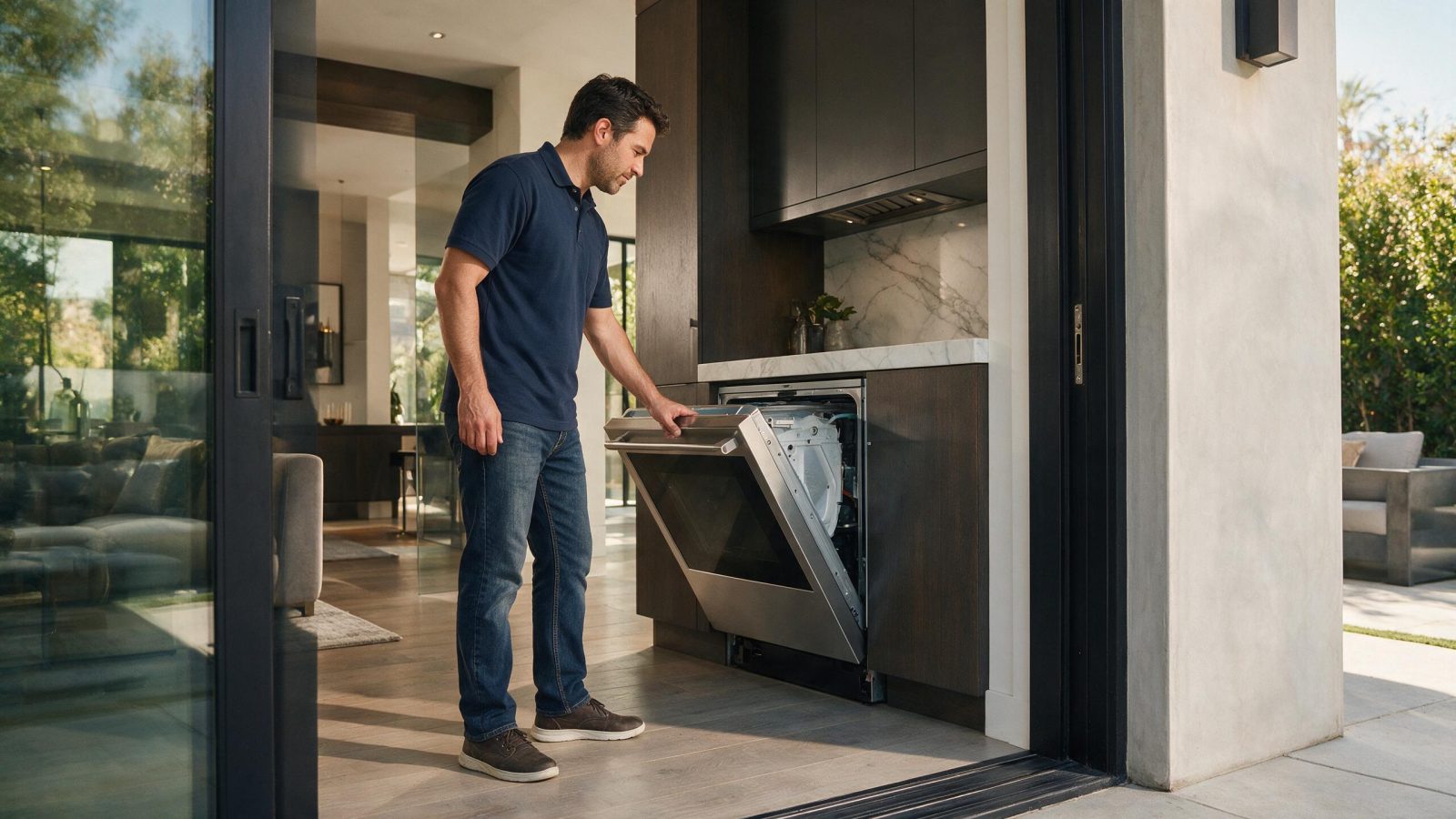
A central underside leak can involve pump seals, sump components, internal hoses, or the tub. These parts usually require removing access panels and operating the machine while observing internal components, which is not a good homeowner diagnostic step around line voltage and water.
If you can see the first drop from outside without disassembly, record the location. Otherwise stop the cycle, protect the floor, and request service.
| Symptom | What it can point to | What you can safely check |
|---|---|---|
| Water at the front, mid-wash | Loading, spray arm, suds, dirty sealing surface | Spray arm rotation, dish placement, detergent type |
| Leak only when the pump runs | Drain hose, disposer or air-gap connection | Visible hose route under the sink, air gap area |
| Water rising early in the cycle | Inlet connection or overfill condition | Visible supply connection, how high water stands in the tub |
Too much detergent, the wrong detergent, or soap contamination can create foam that pushes through the door area even when the tub and gasket are intact. If the leak coincides with heavy foam, correct the detergent issue before replacing parts. Do not add more chemicals to “kill” the suds unless the manufacturer instructions specifically call for a method.
GE’s drain guidance for one dishwasher model says the drain hose below the sink should not be kinked or blocked, and that without an air gap the hose needs a high loop under the counter. If an air gap is installed, its cap can be removed so buildup can be cleared. A recently installed disposer needs its drain plug removed per its own instructions. Never put your hands into a disposer, and avoid drain cleaner in the dishwasher. Check your own manual for how your model is meant to be connected.
The leak stage helps prioritize water inlet/level sensing, door and spray behavior, pump/sump components, or the drain system. A technician can then remove the correct access area, inspect connections, and test the machine without treating every leak as a door-gasket job.
Model number matters because pump layouts, leak detection, float systems, and electronic diagnostics vary across GE, GE Profile, Café, and Hotpoint dishwasher generations.
Some GE dishwasher families can report leak, drain, pressure, or fill conditions. Use the GE error-code library only with the exact dishwasher family. A leak message tells you the control detected a condition; it still does not identify the precise fitting, seal, hose, pump, or sensor that caused it.
Book service for any leak that returns, water under the machine, an overfill condition, a leak during drain, damaged hoses, a door that cannot close normally, or a leak that reaches electrical parts. Persistent water damage to cabinets and flooring can quickly cost more than the appliance repair itself.
Request GE Dishwasher Repair →
No. Loading, spray direction, oversudsing, leveling, and debris on the sealing surface can all create front-door leaks.
The drain pump pressurizes the drain path. A connection that stays dry during wash can leak once drain flow begins.
That is not a repair. Continued leaking can damage flooring and can reach electrical parts. Stop use until the source is understood.
Not simply to diagnose a leak. Built-in removal can involve water, electrical connections, cabinetry, and leveling. Use professional service when the source is hidden.
Send the exact model, the cycle stage when the leak starts, where the first water appears, whether there is heavy foam, any displayed code, and a photo if it can be taken safely. That timing-based description can shorten the diagnostic path substantially.
Check the door first, since a GE microwave that will not start or stops mid-cycle may not be closing fully, or the latch area…
Start with the grease filters and the outside duct outlet, because a clogged filter or a stuck flap can weaken a GE range hood…
Condensation in a wine cooler most often tells you about humid air getting in or poor circulation, not automatically a refrigeration failure. Check whether…
Share a few details and we’ll confirm an appointment. Prefer to talk? Call us and we’ll help right away.
Fields marked with * are required.